Sweat, Soul, and Dhol: Why Punjabi Folk Dance Is Becoming America's Favorite Workout
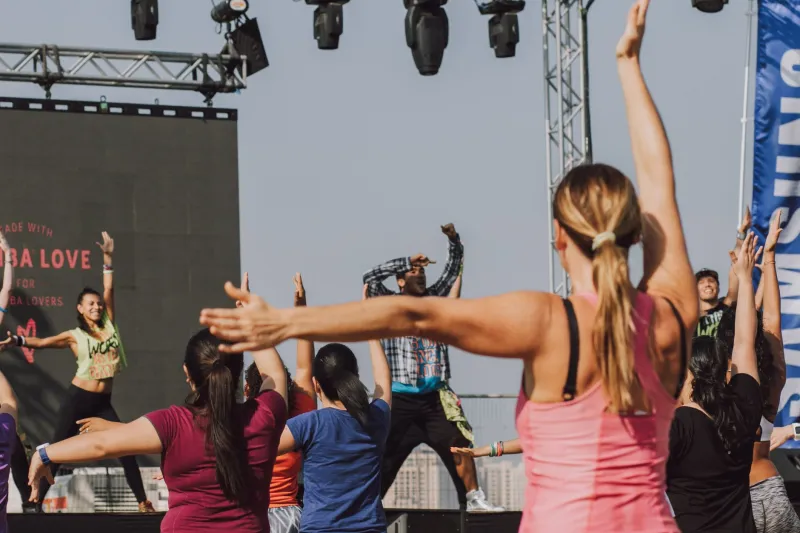
There's a moment in every Bhangra fitness class — usually somewhere between the third shoulder shimmy and the first big jump — when you stop thinking about calories burned and start just feeling it. The dhol rhythm hits different when your whole body is moving with it. That's the thing about Punjabi folk dance: it doesn't feel like exercise until the next morning, when your thighs remind you exactly how hard you worked.
Across the United States, a growing number of gyms, dance studios, and community centers are offering Bhangra and Gidda-based fitness classes, and the response has been nothing short of electric. These aren't novelty cultural experiences tucked into a corner of a multicultural festival — they're legitimate, recurring weekly classes with waitlists in cities like Houston, New Jersey, Seattle, and Atlanta. Something is clearly resonating.
More Than a Dance — It's a Full-Body System
Bhangra, traditionally a harvest celebration dance from the Punjab region, is built around explosive movement: high kicks, wide squats, rotating torso twists, and those iconic raised-arm shoulder rolls. Gidda, its feminine counterpart, blends graceful hand gestures with rhythmic footwork and expressive storytelling through movement called boliyan. Together, they offer a surprisingly comprehensive physical workout.
"People come in thinking it's going to be a cultural show," says Manpreet Kaur, a certified fitness instructor who runs weekly Bhangra cardio sessions at a studio in the Chicago suburbs. "By the end of the first class, they're drenched. I've had personal trainers tell me it hit muscle groups they hadn't activated in years."
She's not exaggerating. Studies on dance-based fitness consistently show high caloric expenditure and cardiovascular benefit comparable to cycling or aerobics. Bhangra specifically engages the core, glutes, hip flexors, and upper back simultaneously — a combination that most traditional gym routines address separately and with far less enthusiasm from participants.
The Mental Health Angle Nobody's Talking About Enough
Beyond the physical, instructors and students alike keep circling back to something harder to quantify: how good it makes you feel. And not just in the generic post-workout endorphin way.
"There's a communal energy in these classes that you don't get on a Peloton," says Jasleen Singh, who started attending Bhangra fitness classes in Fremont, California after relocating from Toronto. "Everyone's a little awkward at first, everyone's laughing, and by the end you feel genuinely connected to the people around you. I didn't expect a workout class to do that for me."
This social dimension is central to why folk dance traditions like Bhangra and Gidda were practiced communally for centuries. They were never solo performances — they were expressions of shared joy, grief, celebration, and seasonal rhythm. When that energy enters a modern fitness space, it doesn't disappear. It transforms.
Several mental health practitioners in South Asian communities have begun recommending these classes as supplemental support for anxiety and depression, particularly for diaspora members who feel disconnected from their cultural roots. Moving your body in a way that carries ancestral memory, even if you didn't grow up with it directly, can be quietly profound.
Why Western Students Keep Showing Up
What's particularly interesting is how many non-South Asian Americans are filling these classes. In studios across the country, instructors report diverse student bodies — Black, Latino, white, and Asian American participants who found their way to Bhangra through social media, a friend's recommendation, or simple curiosity.
"I think people are exhausted by fitness culture that feels transactional," says Navneet Dhaliwal, who teaches a popular Gidda-fusion class in Austin, Texas. "They want to move their bodies in a way that has meaning, history, story. Gidda gives them that. Every gesture means something. Every rhythm comes from somewhere."
There's also the undeniable fun factor. Punjabi folk music — whether traditional or the modern Punjabi pop that many instructors blend into their playlists — is infectious. It's hard to stay self-conscious when the beat drops and everyone around you throws their arms up.
Thinking About Trying It? Here's What You Need to Know
If Bhangra or Gidda workouts sound like your kind of thing, here's how to ease in without feeling lost on day one.
Start with a beginner-focused class. Many studios now offer introductory sessions specifically for people with no dance background. Look for terms like "Bhangra Cardio," "Bhangra Fitness," or "Gidda Flow" in your local studio listings or on ClassPass and Mindbody.
Wear comfortable, flexible clothing. You'll be squatting, kicking, and spinning, so leave the restrictive gym gear at home. Bright colors are always welcome — this is Punjab, after all.
Don't worry about getting it perfect. The instructors we spoke with unanimously said that newcomers who try to nail every step immediately tend to enjoy themselves less than those who just let go and move. The technique will come.
Listen to the music beforehand. Spend fifteen minutes with a Bhangra playlist on Spotify before your first class. Your body will start to internalize the rhythm even before you step into the studio, and you'll feel less caught off guard.
Hydrate more than you think you need to. Seriously. These classes are intense, and the fun disguises how hard you're working until it's too late.
A Movement With Momentum
Here at Shreya Punjab, we've always believed that the art and culture of Punjab carries a kind of energy that travels — across borders, across generations, across genres. Watching that same energy show up in American fitness studios, helping people get healthier and feel more connected, feels like exactly the kind of story worth telling.
Bhangra was born in fields under open skies. It's finding new life under fluorescent gym lighting, and somehow, it's still just as alive. If you haven't tried it yet, maybe it's time to find out what your body has been missing.