Kajal, Phulkari, and a Full Beat: How Punjabi Aesthetics Are Quietly Reshaping American Beauty and Style
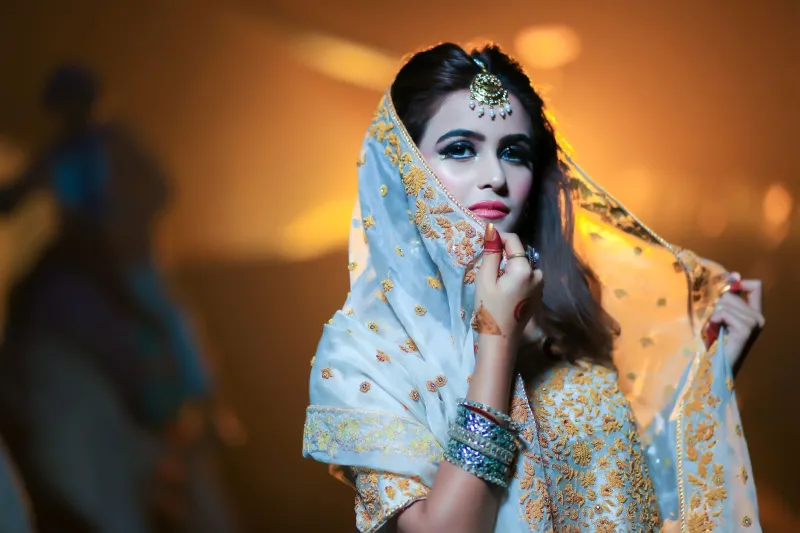
There's a moment Priya Dhaliwal, a makeup artist based out of Fremont, California, keeps coming back to. She was doing a bridal trial in her studio — a South Asian wedding, obviously — and her client's non-Punjabi bridesmaid sat down in the chair and said, "Can you do my eyes like that? That smoky, rimmed thing? I've been trying to get that look for months."
The look she was pointing at? Classic kajal. The same kohl-lined eye that Punjabi women have been perfecting for centuries. The same one Priya's nani taught her to apply with a twisted cotton wick dipped in desi ghee and soot.
"I had to laugh a little," Priya told me over the phone. "Because that look was never not in style in my house. It just took the rest of the world a minute to catch up."
That minute has officially arrived.
The Eye Has It
Kajal — deep, smoky, and unapologetically intense — has become one of the most searched beauty looks among Gen Z consumers in the US over the past two years. Brands like Rare Beauty, NYX, and even Charlotte Tilbury have leaned hard into "smudged liner" and "lived-in eye" campaigns that, if you grew up in a Punjabi household, look very familiar.
But there's a difference between a trend and a tradition. Punjabi-American artists like Priya are quick to point that out.
"Kajal isn't just an aesthetic for us," she explains. "It's protective. It's spiritual. My mom put it on my eyes as a baby to ward off the evil eye. When I use it now in my work, I'm carrying all of that with me — even if my client just thinks it's a cute smoky eye."
That layered meaning is exactly what's drawing younger American consumers toward culturally rooted beauty in the first place. Gen Z, more than any generation before them, is skeptical of beauty that doesn't come with a story. They want to know where something came from. They want context. And Punjabi beauty traditions? They've got centuries of it.
Phulkari Goes Mainstream — But on Whose Terms?
It's not just makeup. Step into any indie boutique in Brooklyn, Silver Lake, or Wicker Park right now and you'll find something that looks a lot like phulkari — the intricate, geometric hand-embroidery that originates from the Punjab region. Bright threads on earthy base fabrics, bold patterns that somehow feel both ancient and completely fresh.
Designer Simran Bajwa, who runs her label Takhti out of Chicago, has been watching this with a complicated mix of pride and protectiveness.
"Phulkari is not just a pattern," she says. "Every stitch has a meaning. The motifs tell stories about harvests, weddings, seasons. When fast fashion brands slap something that looks like phulkari on a $25 top from a factory overseas, that history evaporates. It becomes a print. It stops being a language."
Simran's approach is deliberately different. Her pieces are made in collaboration with artisan cooperatives in Punjab, India, and every garment comes with a card explaining the embroidery style, the region it comes from, and the woman who made it. Her customers — a mix of Punjabi diaspora and non-South Asian Americans who found her on Instagram — have responded fiercely. Her last collection sold out in under 48 hours.
"People are hungry for things that mean something," she says. "They're tired of fashion that's disposable. Phulkari is the opposite of disposable. It takes weeks to make by hand. That slowness is radical right now."
Gen Z's Cultural Curiosity Is Changing the Market
The numbers back this up. A 2023 survey by Mintel found that over 60% of Gen Z beauty consumers in the US say they prefer products with "cultural heritage" or "traditional ingredient" stories. Pinterest reported a 200%+ spike in searches for "Indian bridal makeup" and "South Asian embroidery fashion" between 2021 and 2024. And TikTok's beauty algorithm has made Punjabi creators — showing everything from haldi skincare routines to how to drape a dupatta — some of the most-watched voices in the DIY beauty space.
For Punjabi-American creators, this visibility is meaningful, but it also comes with responsibility.
Makeup artist and content creator Navneet Kaur, who posts under the handle @navneet.beats on TikTok and has built a following of nearly 400,000, puts it plainly: "I'm not just teaching people how to do a bold eye. I'm teaching them why we do a bold eye. The history matters. The intention matters. If I don't tell that story, someone else will — and they might get it wrong."
Her most viral video isn't a tutorial. It's a six-minute piece where she traces the history of kajal from ancient Ayurvedic texts to her grandmother's kitchen in Ludhiana to her own makeup kit in Queens. It has over 4 million views.
Beauty as Belonging
What's happening here goes beyond aesthetics. For Punjabi-American women especially, embracing and sharing these beauty traditions is a form of cultural reclamation — a pushback against decades of assimilation pressure that told them their thick brows were "too much," their gold jewelry was "flashy," their bright colors were "loud."
Priya remembers being told in middle school that her kajal-lined eyes made her look "harsh." Simran grew up hiding her salwar kameez in her backpack on the way to school so she could change before walking through the front door.
"That generation of shame is over," Priya says. "My clients now — the younger ones, the ones in their twenties — they're not apologizing for anything. They want more gold. More color. More kajal. They want to look like their moms and their nanis and they want the whole world to see it."
That shift, from hiding to celebrating, is maybe the most powerful thing driving this moment. Punjabi aesthetics aren't trending because they're exotic or novel. They're resonating because they're real — rooted in land, in family, in ritual, in love.
The Road Forward
Not everyone in the Punjabi-American creative community feels purely celebratory about the mainstream attention. The fear of appropriation is real, and the line between appreciation and extraction can get blurry fast when big brands get involved.
But creators like Simran, Priya, and Navneet are choosing to stay in the conversation rather than step back from it — using their platforms to educate, to center the source, and to make sure that when Punjabi aesthetics show up in American culture, they show up with their stories intact.
"Our beauty was never meant to be hidden," Navneet says. "It was always meant to be shared. We're just finally in a world where people are actually listening."
And from where we're sitting at Shreya Punjab, that sounds like exactly the kind of revolution worth watching.