Grandma's Hands, My Story: How Punjabi-American Kids Are Cooking Their Way Back to Their Roots
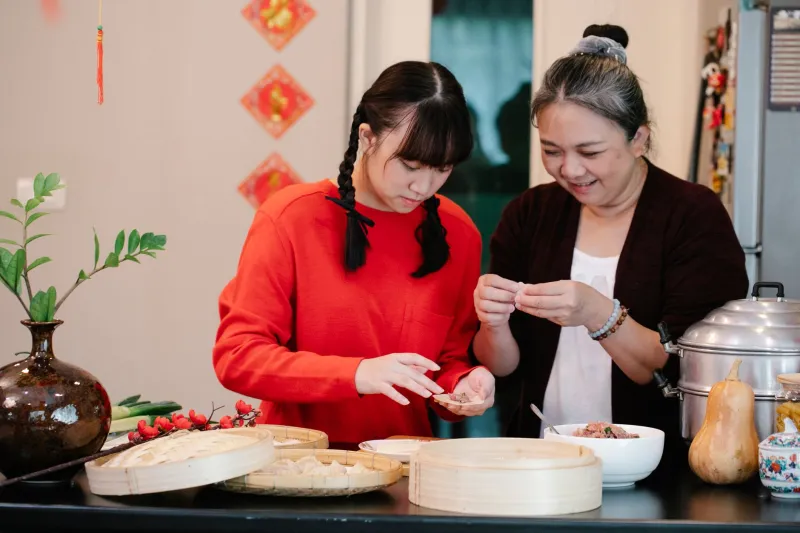
There's a specific kind of grief that diaspora kids carry — not for a place they've lost, but for one they never quite got to hold. For a lot of second-generation Punjabi-Americans growing up in cities like Fresno, Jersey City, or Naperville, that grief lives in the kitchen. In the smell of sarson ka saag simmering on a Sunday morning. In the sound of a rolling pin hitting a floured countertop at 6 a.m. In the way their nani never used a measuring cup for anything, ever.
Now, a growing number of young Punjabi-Americans are returning to those kitchens — their own, their parents', their grandparents' — with phones in hand and questions ready. They're filming. They're writing things down. They're hosting dinners for strangers who somehow feel like family. And in doing all of this, they're building something that's part cultural archive, part community center, part love letter to a Punjab they're still getting to know.
More Than Just a Recipe
When Simran Dhaliwal, a 26-year-old based in the Bay Area, started her Instagram series Pinni & Me, she wasn't thinking about cultural preservation. She just didn't want to forget how her grandmother made pinni — those dense, ghee-soaked wheat flour sweets that showed up every winter without fail.
"My nani passed away two years ago and I realized I had never actually watched her make them start to finish," Simran says. "I had eaten them hundreds of times. But I didn't know them."
She pieced the recipe together from memory, phone calls with her mom, and a worn notebook her nani had kept — half in Punjabi, half in a shorthand only the family understood. What started as a personal project turned into something much bigger. Her followers started sharing their own missing recipes in the comments. DMs poured in from people in Canada, the UK, Australia — all doing the same frantic mental archaeology, trying to reconstruct dishes before the people who made them were gone.
"Food is the most honest language we have," Simran says. "It doesn't need translation. When I make pinni and it tastes right, I feel like she's still here."
The Pop-Up as a Portal
Across the country, young Punjabi-Americans are taking this impulse out of the home kitchen and into shared spaces. Pop-up dinners — intimate, often ticketed events hosted in apartments, community halls, or borrowed restaurant kitchens — have become a way to share not just food but the stories behind it.
In Chicago, a collective called Langar Table (named after the Sikh tradition of community meals) hosts monthly dinners where every dish comes with a handwritten card explaining its origin — which village it came from, who in the family made it, what occasion it was tied to. The founders, a group of friends in their late 20s, started the project after realizing their friend group barely knew how to make the foods they'd grown up eating.
"We'd all assimilated in different ways," says co-founder Arjun Brar. "Some of us had stopped speaking Punjabi. Some of us had never learned to cook because our parents wanted us focused on school. And then one day you're 28 and you realize you don't actually know anything about where you come from."
The dinners have become something of a ritual — a space where people can ask questions without embarrassment, where someone's imperfect attempt at makki di roti gets celebrated instead of corrected, where the food itself becomes the conversation starter.
Going Viral with a Karahi
Online, Punjabi food content is having a real moment. Creators like Harleen Kaur, whose TikTok account @DhabaVibesOnly has amassed over 400,000 followers, are breaking down traditional recipes in ways that feel approachable for people who grew up watching their elders cook but never actually learned how.
Harleen's style is casual and funny — she narrates her cooking the way you'd text a friend, full of asides and self-deprecating humor about the times she's gotten it wrong. But beneath the lighthearted delivery is a serious commitment to accuracy. She consults with her mother and aunts before posting anything, and she's started tagging regional variations so viewers understand that Punjabi food isn't monolithic.
"People always act surprised when I tell them there's a whole debate about whether methi goes in aloo paratha or not," she laughs. "Like, yes, we have opinions. We have strong opinions. That's also part of the culture."
For Harleen, the comment section has become its own kind of community. "Someone will say 'my mom made it this way' and then someone else from a different part of Punjab will say 'we do it this way' and suddenly there's this whole conversation happening about food and memory and place. That's not something I planned. It just happened."
Cooking as Resistance
There's a political dimension to all of this that's worth naming. For many South Asian immigrants who came to the US in the 70s and 80s, assimilation meant quietly setting aside certain practices — including food. Packing a tiffin of dal to school meant getting stared at. Cooking with ghee felt like something to hide, not celebrate.
Their kids and grandkids are pushing back against that inherited shame in the most direct way possible: by cooking loudly and publicly, by posting their saags and their lassis and their langar-inspired spreads online without apology, by hosting pop-up dinners that center Punjabi cuisine as something worthy of reverence — not as a curiosity, but as a cuisine with depth, history, and serious technique.
"My mom used to say 'just eat American food at school so you don't stand out,'" says Simran. "And I get why she said that. But I want my kids to grow up thinking that sarson ka saag is something to be proud of. Something worth learning."
What Gets Saved
What's emerging from all of this — the Instagram archives, the pop-up dinners, the TikTok tutorials — is something that functions like a living cookbook. Imperfect, personal, constantly evolving. Not a museum exhibit but a working document.
And maybe that's the point. These aren't just recipes being saved. They're relationships. They're the specific memory of a grandmother's hands shaping dough, the argument about how much ginger goes in chai, the quiet pride of finally nailing a dish that took three attempts to get right.
For Punjabi-Americans navigating the push and pull of dual identities, the kitchen has become a place where both versions of themselves can coexist — where they can be fully American and fully Punjabi at the same time, without having to choose.
That's not a small thing. That's everything.