Dhol Meets Data: How Punjabi Producers Are Cracking the Code of Western Streaming Platforms
There's a moment in a lot of Punjabi-American producer origin stories that sounds almost identical. You're at a family wedding in some Marriott ballroom in New Jersey or Sacramento, the dhol player kicks in, and something in your chest just moves. Not metaphorically — physically. You feel it before you understand it. For a lot of second-gen kids who grew up straddling two musical worlds, that feeling became an obsession. And now, years later, that obsession is showing up on Spotify editorial playlists, TikTok For You pages, and Apple Music charts in cities that have never hosted a single Punjabi wedding.
The rise of Punjabi music on Western platforms isn't accidental. It's engineered — carefully, deliberately, and with a surprising amount of spreadsheet work.
The Algorithm Isn't Colorblind, But It Can Be Trained
Ask any independent Punjabi producer working out of the US right now and they'll tell you the same thing: the algorithm doesn't care about your culture, but it does care about engagement patterns. Skip rates, save rates, playlist adds, repeat listens within 24 hours — these are the metrics that determine whether your track gets pushed to new listeners or quietly buried.
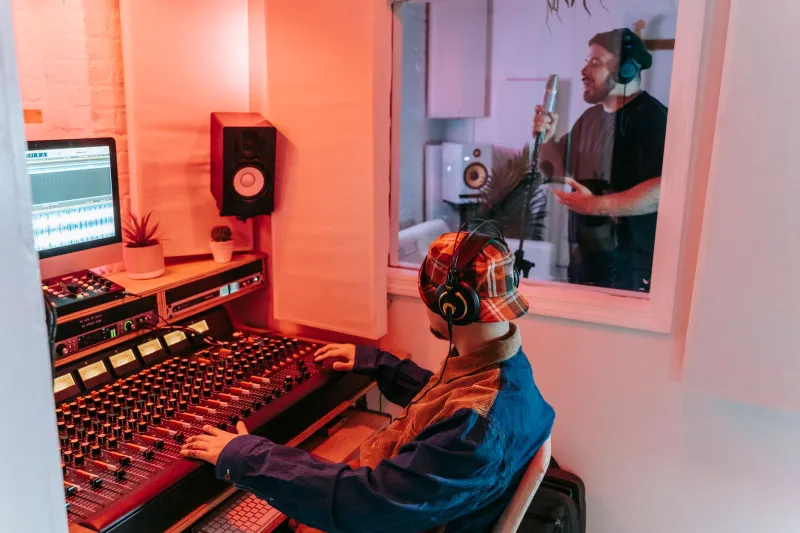
Producers like LA-based Karan Dhaliwal (who releases under the name KD Beatz) have gotten almost academic about it. "I spent three months just studying what made certain Punjabi tracks pop in the US versus India," he said. "The tempo range matters. The intro length matters. If your hook doesn't hit in the first 15 seconds, you're done on TikTok."
What he and others have figured out is a kind of formula — not a rigid one, but a framework. Traditional Punjabi instruments like the tumbi, algoza, or sarangi get layered over production structures that Western listeners already recognize: trap percussion patterns, lo-fi chord progressions, even hyperpop textures. The result is something that feels both completely new and somehow familiar, regardless of whether you grew up listening to Gurdas Maan or Kendrick Lamar.
Authenticity Isn't the Enemy of Strategy
One of the biggest misconceptions about this movement is that blending genres means selling out. Producers in this space push back hard on that framing. Mixing a dhol loop with an 808 isn't erasure — it's translation. And translation has always been part of how culture travels.
Simran Kaur, a producer and sound designer based in the Bay Area who's worked on projects that have landed on Spotify's South Asian Heat playlist multiple times, puts it plainly: "My dadi sang in a certain way because that's what her generation knew. I grew up with both her voice and SoundCloud rap. Why would I pretend one of those things didn't happen?"
That dual literacy is actually a competitive advantage. These producers don't have to approximate either sound — they grew up inside both of them. The authenticity isn't performed; it's structural. It's in the way a tumbi melody gets pitched and chopped to sit inside a modern mix without losing its character. It's in the Punjabi lyrics that carry emotional weight even for listeners who don't speak the language, because the feeling translates even when the words don't.
TikTok as a Launch Pad (and a Minefield)
If Spotify is where longevity lives, TikTok is where moments are born. And the Punjabi music community has gotten genuinely clever about using the platform's mechanics to their advantage.
Short clips featuring traditional dance moves synced to hybrid Punjabi-trap beats have become their own micro-genre of content. The videos spread fast because they're visually distinct — the color, the movement, the energy of bhangra or giddha is immediately eye-catching in a feed full of static talking-head videos. When those clips go viral, they drive streams. When streams spike, playlist algorithms take notice. It's a flywheel, and once it starts spinning, it's hard to stop.
But TikTok is also unpredictable in ways that can sting. Licensing issues, content takedowns, and the platform's well-documented inconsistency around non-English content have created real headaches. Several producers have had viral moments effectively capped because the algorithm deprioritized content it couldn't easily categorize. The workaround, many have found, is to make sure the English metadata — song titles, captions, hashtags — is optimized even when the content itself is entirely in Punjabi. It's a small thing that makes a measurable difference.
The Economics of Going Viral From the Diaspora
Here's something that doesn't get talked about enough: breaking through on Western platforms from a South Asian cultural lens is still financially complicated. Streaming payouts are notoriously low across the board, but for artists whose primary fanbase spans both the US and South Asia, the royalty picture gets even messier. Rates vary wildly by country, and a track that racks up millions of streams in India generates a fraction of what the same play count would in the US.
This is why the smartest producers in this space are building revenue models that don't depend solely on streaming. Sync licensing for ads and TV placements is huge — a Punjabi-inflected beat that lands in a Target commercial or a Netflix show can generate more income than years of playlist placement. Live performance fees are climbing as bhangra and fusion events grow in popularity at college campuses and cultural festivals across the country. And brand partnerships with South Asian-owned businesses in the US have become a real income stream as that consumer market gets more attention.
Karan Dhaliwal puts it this way: "I make music because I love it. But I run it like a business because I want to keep making it."
What Comes Next
The trajectory here feels less like a trend and more like a tipping point. Punjabi music already has a decades-long history of influencing global pop — bhangra's fingerprints are all over British dance music, and you can hear echoes of it in mainstream hip-hop production going back to the early 2000s. What's different now is that the people doing the influencing are in the driver's seat. They're not being sampled without credit or diluted for mass appeal. They're producing their own work, on their own terms, and using every tool the digital economy offers to make sure it gets heard.
For Shreya Punjab, this is exactly the kind of story we love — not just because it's about Punjabi culture making its mark on the world, but because it's about a generation that refuses to choose between where they came from and where they're going. The dhol and the DAW. The tumbi and the algorithm. Both. Always both.
The beat was always there. Now the whole world is finally catching up.