The Weight Nobody Names: Mental Health, Silence, and the Slow Revolution Happening Inside Punjabi-American Homes

Let's start with what's actually happening.
Depression is the leading cause of disability worldwide. Anxiety disorders affect over 40 million adults in the United States. Suicide is the second leading cause of death among Americans aged 10 to 34. These are not statistics that apply only to certain communities. They apply to all of us — including communities that have built their entire cultural identity around resilience, hard work, and not complaining.
In Punjabi-American households, mental health has historically been one of the most avoided conversations a family can have. Not because the pain isn't real. But because generations of cultural conditioning have taught people — especially men, especially first-generation immigrants, especially anyone who sacrificed enormously to build a life here — that naming the pain is the same as being defeated by it.
That equation is killing people. And a growing number of Punjabi-Americans are done pretending otherwise.
The Mythology of the Strong Punjabi
Punjabi culture has a deep, genuine tradition of resilience. The history of Punjab — partition, displacement, migration, rebuilding — is a history of people surviving things that should have broken them. That strength is real, and it deserves to be honored.
But somewhere along the way, resilience became conflated with silence. Surviving became confused with never struggling. And the cultural mythology of the strong Punjabi — the hard-working immigrant, the stoic patriarch, the selfless mother — left almost no room for anyone to say, "I am not okay."
"In my family, sadness was treated like a character flaw," says Navneet, a 26-year-old graduate student in Los Angeles. "If you were depressed, it meant you were ungrateful. It meant you weren't working hard enough. It meant something was wrong with you, not with what you were carrying."
This framing is common across South Asian communities, but it has particular texture in Punjabi-American spaces. The immigrant sacrifice narrative — everything we gave up so you could have this life — can function as an unintentional emotional gag order. How do you tell a parent who worked double shifts for twenty years that you're struggling with anxiety? How do you explain that the life they built for you, the one that looks so good from the outside, can still feel crushing from the inside?
What the Data Tells Us (And What It Doesn't)
Here's the frustrating truth about mental health data in Punjabi-American communities: there isn't enough of it.
South Asian Americans are consistently underrepresented in mental health research. When data does exist, it often lumps together communities with vastly different histories, languages, and cultural contexts. Punjabi-Americans — whether Sikh, Hindu, or Muslim — are rarely disaggregated in studies, which means the specific pressures and patterns of this community remain largely invisible to researchers, policymakers, and healthcare providers.
What we do know is that South Asian Americans underutilize mental health services at significantly higher rates than other groups. We know that stigma is a primary barrier to help-seeking. We know that rates of depression and anxiety among second-generation South Asian Americans are comparable to, and in some studies higher than, those of their white peers — despite the model minority myth that suggests otherwise.
And we know, from the testimonies of community members, therapists, and organizers, that people are suffering in silence in ways that are not reflected in any official count.
The Specific Weight of the Second Generation
For children of Punjabi immigrants, the mental health burden has its own particular shape.
There is the pressure of being a living return on investment — the embodiment of everything your parents sacrificed. There is the cognitive labor of code-switching between home and school, between Punjabi and English, between the person your family needs you to be and the person you actually are. There is the grief of a culture you love but only partially inherited, and the guilt of feeling like you're not Punjabi enough to claim it fully.
For many, there is also the specific weight of intergenerational trauma — the inherited anxiety and hypervigilance that can travel through families without anyone naming it as such.
"My grandfather was displaced during Partition," says Ranjot, a 31-year-old therapist in Seattle. "He never talked about it. My dad never talked about it. But I grew up in a household where there was always this low hum of dread, this sense that safety was temporary. I didn't understand where it came from until I was in grad school studying trauma."
Ranjot now specializes in working with South Asian clients, and she says the pattern is one she sees constantly: inherited emotional weight that has never been named, let alone processed.
The People Building Something Different
Across the country, a quiet network of Punjabi-American mental health advocates, therapists, and community organizers is doing the work of dismantling this silence — one conversation at a time.
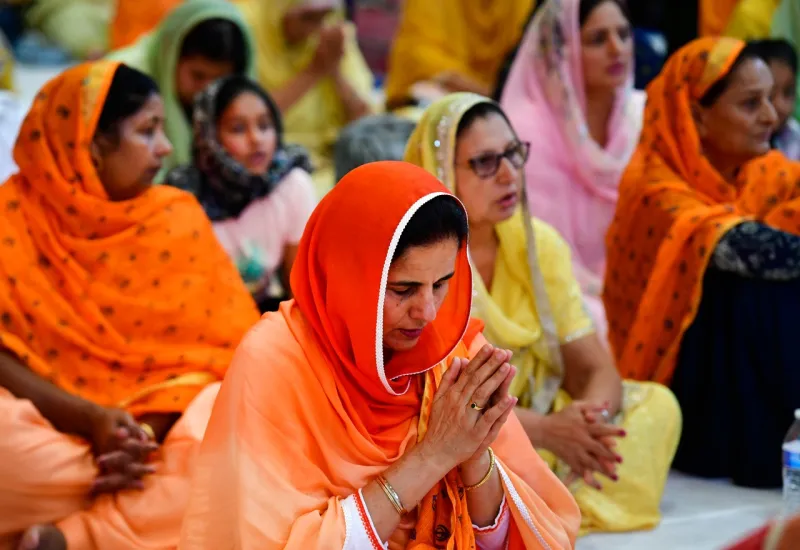
Some are therapists who specifically sought out training in culturally competent care because they couldn't find it for themselves when they needed it. Some are social media creators sharing their own mental health journeys in Punjabi and English, reaching young people in the language they actually live in. Some are organizing community healing circles, peer support groups, and mental health first aid trainings inside gurdwaras and community centers.
"We're not waiting for the stigma to disappear before we start helping people," says Mandeep, who runs a mental health advocacy group in the Bay Area. "We're meeting people where they are. We talk about izzat, we talk about family honor, we talk about what it means to be a good Punjabi son or daughter — and we do it in a way that doesn't shame anyone. We just slowly expand what's possible to say out loud."
What Healing Looks Like in Community
For many Punjabi-Americans, the path toward mental health support doesn't start with a therapist's office. It starts with a trusted cousin who says, "me too." It starts with a social media post that names exactly what you've been feeling. It starts with a gurdwara that decides to host a mental health awareness event and doesn't make it weird.
Cultural entry points matter. When mental health conversations arrive in familiar containers — through izzat-respecting language, through faith frameworks, through the voices of people who look and sound like you — they land differently.
"Therapy felt very white and very alien to me at first," says Priya, a 24-year-old in Houston who eventually found a South Asian therapist after years of struggling alone. "Not because it wasn't helpful, but because I had to do so much translation. I had to explain my family structure, my religion, my relationship to shame. With a therapist who got it, I could just start from where I actually was."
The Conversation That Can't Stop
Naming the problem is not the same as solving it. The stigma is still there. The cultural pressure is still real. The shortage of culturally competent mental health providers in Punjabi-American communities is still a genuine barrier.
But something has shifted. The conversation is happening in places it wasn't happening five years ago. Young people are entering therapy, starting support groups, and talking openly about depression and anxiety in ways that would have been unthinkable to their parents' generation.
The weight is still there. But more and more people are refusing to carry it alone — and that, quietly, is everything.