Two Tongues, One Voice: How Punjabi-Americans Are Turning Language Fluidity Into a Superpower
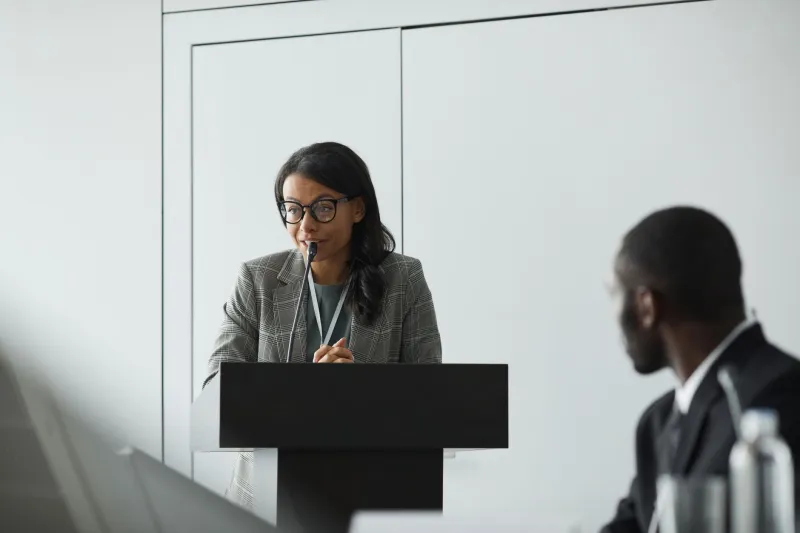
There's a moment Simran Dhaliwal remembers clearly. She was presenting a quarterly report to a room full of executives at a San Jose tech firm, mid-sentence, perfectly polished, when her phone buzzed. It was her mom. The voicemail she listened to later was pure Punjabi — fast, warm, full of idioms that don't translate. And Simran realized something in that gap between those two worlds: she was fluent in both. Not just linguistically. Culturally. And that, she says, is worth something.
"I used to think I was just confused," she laughs. "Now I think I'm actually just really, really adaptable."
Simran isn't alone. Across the United States — in classrooms in Fresno, boardrooms in New York, recording studios in LA — second and third-generation Punjabi-Americans are renegotiating their relationship with language. The old shame around mixing tongues is dissolving. What's replacing it is something more interesting: a growing recognition that moving fluidly between English, Punjabi, and Hinglish isn't a sign of confusion. It's a sign of range.
The Grammar of Growing Up Between Worlds
For a long time, code-switching carried weight in the wrong direction. Kids got teased at school for accents. Parents were told to speak English at home so their children wouldn't fall behind. The message, spoken or not, was clear: pick a lane.
But language doesn't really work that way — especially not in households where dinner conversations bounce between a Punjabi proverb and a reference to whatever's trending on TikTok. Linguists have a term for this: translanguaging. It's the idea that multilingual speakers don't operate with separate, airtight language systems. They draw from one fluid repertoire, pulling whatever works best for the moment.
Dr. Preethi Anand, a sociolinguistics professor at UC Davis who studies South Asian diaspora communities, puts it plainly: "What we used to pathologize as 'language interference' is actually a sophisticated cognitive skill. These speakers are not failing at English or failing at Punjabi. They're succeeding at something more complex than either."
Her research tracks how Punjabi-American students in California's Central Valley — one of the largest Punjabi communities outside of India — outperform monolingual peers in tasks requiring cognitive flexibility. The ability to hold two linguistic frameworks simultaneously, she argues, trains the brain in ways that show up far beyond the classroom.
In the Boardroom, Bilingualism Is a Business Card
Raj Brar spent years flattening his speech at work. Cleaner consonants. No Punjabi filler words. Nothing that might mark him as anything other than generically American professional. It worked, he says — right up until it didn't.
"I got promoted, but I was exhausted," he says. Raj now leads a team of thirty at a logistics company in the Bay Area, and his approach has shifted entirely. He's started leaning into his cultural fluency, especially when working with South Asian clients or colleagues. "There's a shorthand. A trust. When you drop even one Punjabi phrase with the right person, the whole room relaxes."
This isn't just anecdotal. Research from the Harvard Business Review has shown that leaders who demonstrate cultural fluency — not just language, but the values, humor, and communication styles embedded within it — build stronger team cohesion across diverse workplaces. For Punjabi-Americans, that fluency often runs three languages deep.
And in industries like tech, healthcare, and finance — where South Asian professionals are increasingly prominent — the ability to code-switch isn't just socially useful. It's strategically valuable. You can hold space in a room with a first-generation immigrant client and then pivot seamlessly to pitch the same idea in clean corporate English. That's not dilution. That's range.
Classrooms Are Catching Up
The shift is happening in education too, though slowly. A handful of school districts in California and New Jersey — states with significant Punjabi-American populations — have started piloting heritage language programs that treat Punjabi not as a remedial subject for kids who "don't know English yet," but as an asset worth developing.
Teacher Gurpreet Kaur, who runs a Punjabi heritage class at a middle school in Yuba City, California, says the change in how students carry themselves has been visible. "When you tell a kid their language is worth learning, you're telling them they are worth something. The confidence just shifts."
She's also noticed something else: students who engage with Punjabi language and literature tend to become better writers in English. The exposure to different narrative structures, different ways of building an argument or telling a story, seems to expand their overall expressive range.
"Punjabi poetry is incredibly dense and layered. When kids start to understand that, their English essays get richer. They start reaching for metaphor. They stop being so literal."
Creators Are Making the Mix the Message
Nowhere is linguistic fluidity more visible — or more celebrated — than in the creator economy. Punjabi-American content creators on YouTube, Instagram, and TikTok have built massive audiences in part because they refuse to flatten their language into something uniform.
Creators like Jasleen Kaur, who runs a lifestyle channel blending South Asian cooking, wellness, and cultural commentary, say their audience engagement spikes when they mix languages naturally. "When I drop into Punjabi mid-video, my comments go wild. People say it feels real. Like I'm not performing."
And that's exactly it. In a media landscape saturated with highly produced, carefully curated content, authenticity is the rarest currency. The mix of languages signals: I'm not translating myself for you. I'm just being myself, and you're welcome to come along.
This is the art form hiding in plain sight. Code-switching, when it's intentional, becomes a kind of performance — a way of signaling belonging, building intimacy, and asserting identity all at once. It's not sloppy speech. It's precision.
Reclaiming the Mix
What's most striking about this generation isn't just that they code-switch. It's that they're starting to talk about it openly, even proudly. On Reddit threads, in college essays, in job interviews where candidates now sometimes proactively mention multilingual fluency as a strength — the conversation has changed.
Simran, the tech professional from San Jose, recently started mentoring young Punjabi-American women entering corporate environments. One of her first pieces of advice: don't hide the languages you carry.
"Your Punjabi isn't getting in the way of your English," she tells them. "It's making your English better. It's making you better. You just have to stop apologizing for it."
In a country that has historically asked immigrants and their children to shed their languages like old coats, that's a genuinely radical reframe. The tongue you speak at home isn't a liability. It's a credential. And for Punjabi-Americans navigating an increasingly complex, multicultural America, two tongues — or three — might just be the most powerful voice of all.