Aunties, Algorithms, and Atta: How Punjabi Elders Are Quietly Mastering the Matchmaking App Era
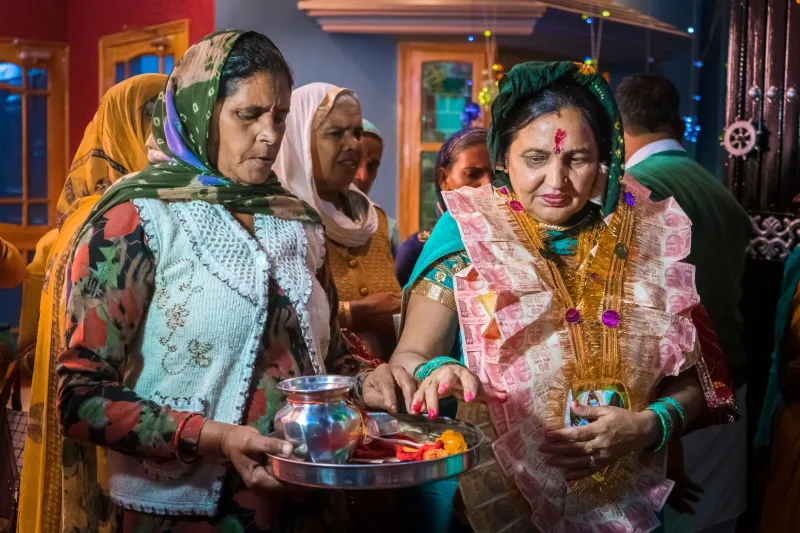
Somewhere in the suburbs of Fremont, California, a 68-year-old woman named Gurpreet Kaur is scrolling through a matrimonial profile on her iPad while her daughter-in-law refills her chai. She pauses on a photo, tilts her head, and says — with complete authority — "His eyes are kind. But his gotra needs checking."
This is matchmaking in 2024, Punjabi-American style.
For generations, the role of the family elder — or more specifically, the rishtedaar who knew someone who knew someone — was the backbone of how Punjabi families found marriage partners. It was a whole ecosystem: whispered conversations at gurudwara, coded phone calls between aunties in different time zones, a handwritten biodata passed between households like a sacred document. It worked. It didn't always work well, but it worked.
Then came Tinder. And Hinge. And Bumble. And suddenly, the entire architecture of how young Punjabi-Americans thought about love shifted overnight.
What nobody expected was that the elders wouldn't just step aside.
The Rishtedaar Doesn't Retire
Talk to second-generation Punjabi-Americans about their parents' involvement in their love lives and you'll hear everything from eye-rolls to genuine gratitude. But one thing is consistent: the aunties didn't disappear when the apps arrived. They adapted.
"My mom literally made a profile for me on Shaadi.com without telling me," laughs Simran, 29, a nurse based in Chicago. "I found out when she called me to say she'd already been chatting with a guy's mother for two weeks. I was mortified. But honestly? He was a good match. We dated for eight months."
This kind of parallel-track matchmaking — where the elder operates almost like a shadow agent alongside the young person's own dating life — is more common than people admit. Community elders have figured out that digital platforms aren't threats to their role. They're just new tools.
Some have gotten remarkably good at using them.
Swipe Culture Meets Izzat Culture
The tension, of course, is real. Punjabi-American families carry a complex emotional inheritance around marriage — concepts of izzat (family honor), caste considerations, religious compatibility, and the deeply held belief that marriage is not just between two people but between two families. None of that translates cleanly into a 300-character Hinge bio.
"Apps are designed for individual choice," explains Dr. Navneet Dhaliwal, a sociologist at UC Davis who studies South Asian diaspora communities. "But Punjabi marriage culture is fundamentally communal. The friction isn't just generational — it's structural."
That friction shows up in specific, sometimes painful ways. A young woman might match with someone on an app, feel genuinely excited, and then watch the connection unravel the moment family gets involved and discovers a caste difference or a regional mismatch. Conversely, a family-approved match can feel suffocating to someone who's used to building emotional intimacy on their own terms first.
What's interesting is that many Punjabi-American families aren't choosing one system over the other. They're running both simultaneously — and negotiating the overlap in real time.
The Unexpected Tech Literacy of Punjabi Grandmothers
If you assumed that the elders in this equation are the ones resisting technology, think again. Across Punjabi-American communities in places like Edison, NJ, Sacramento, and the Dallas-Fort Worth area, grandmothers and older aunties have become surprisingly fluent in digital matrimonial platforms — particularly South Asian-specific ones like Shaadi.com, BharatMatrimony, and Jeevansathi.
These platforms, which function more like structured databases than swipe-based apps, actually map quite well onto the traditional matchmaking mindset. You can filter by religion, caste, height, profession, and even skin tone (a feature that generates its own justified controversy). For elders who once relied on handwritten biodata sheets, these platforms feel intuitive in a way that Bumble simply doesn't.
"My nani literally calls me to report on profiles she's found," says Harpreet, 26, a software engineer in Seattle. "She screenshots them and sends them to our family WhatsApp group. It's equal parts embarrassing and kind of sweet? She's trying. She wants me to be happy."
That desire — to see the next generation settled and happy — is the emotional engine underneath all of this. Whatever friction exists around methods, the motivation on the elders' side is rarely malicious. It's love expressed through a cultural framework that prioritizes security, family alignment, and long-term stability.
When Both Worlds Actually Work Together
Some families have figured out a rhythm that genuinely honors both approaches. The young person dates — sometimes through apps, sometimes organically — and the family stays involved as a sounding board rather than a gatekeeper. Elders offer context, run informal background checks through community networks, and provide a kind of cultural due diligence that apps simply can't replicate.
"My parents actually helped me figure out something I couldn't see myself," admits Mandeep, 31, who recently got engaged in the Bay Area. "I was really into this guy I met on Hinge, but my mom noticed some things in how he talked about his family that gave her pause. She was right. He had some unresolved stuff going on. I might've ignored those signs on my own."
These stories don't make headlines the way conflict does, but they're everywhere in Punjabi-American communities — quiet collaborations between generations, where the elder's instinct and the young person's agency find a workable middle ground.
The Conversation Nobody Wants to Have (But Everyone's Having)
There are harder conversations underneath all of this, too. Caste discrimination embedded in matrimonial filtering is a genuine issue that younger Punjabi-Americans are increasingly vocal about challenging. The pressure on women — still disproportionate compared to men — to be "settled" by a certain age hasn't evaporated just because the tools have changed. And LGBTQ+ Punjabi-Americans face a layer of complexity in all of this that often goes unacknowledged entirely.
The app era hasn't solved these problems. In some ways, it's just made them more visible.
But it has created new openings for dialogue. When a young Punjabi-American can point to a profile, a conversation thread, or a shared value on a platform, it sometimes gives them language to have conversations with their families that would've been nearly impossible a generation ago.
The Auntie Network Isn't Going Anywhere
Here's the thing about Punjabi matchmaking culture that outsiders often miss: it was never really about control. At its core, it was about community — the idea that finding a life partner was too important to do alone, that the people who love you should have a voice in it.
Apps have given individuals more autonomy. That's genuinely good. But they haven't replaced the warmth of someone who knows your family, knows your values, and is rooting for you in a way that no algorithm can replicate.
In that Fremont living room, Gurpreet Kaur is still scrolling. She's got three tabs open — Shaadi.com, a community WhatsApp group, and, yes, she made her grandson show her how Hinge works.
She hasn't cracked the algorithm yet. But she's learning.
And honestly? So is everyone else.