Every Dish Tells a Border Story: How Punjabi Restaurants in America Are Feeding History Back to Life
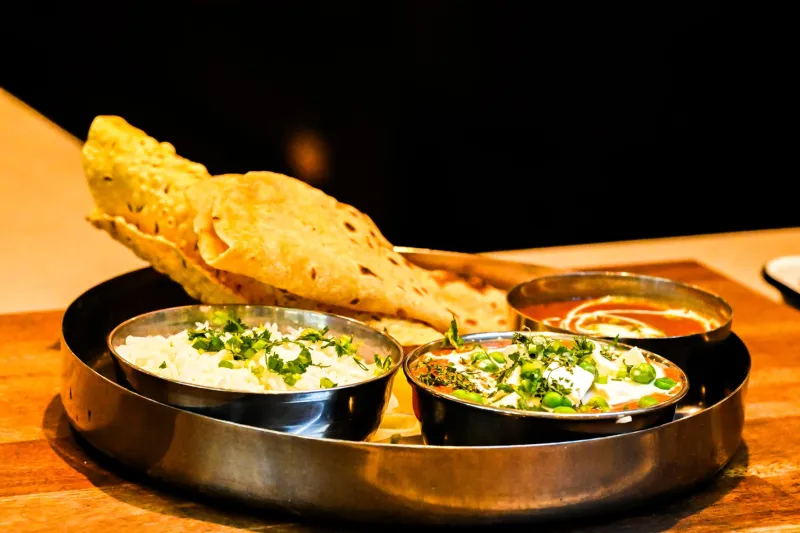
There's a dal makhani on the menu at a small Punjabi restaurant in Fremont, California, that has no business being as emotional as it is. It's creamy, slow-cooked, deeply spiced — the kind of dish that makes you close your eyes after the first bite. But if you ask the owner, Chef Harpreet Dhaliwal, where the recipe comes from, she won't just say "Punjab." She'll tell you it came from a grandmother who carried it across a border in 1947 with nothing else but the clothes on her back.
That's the thing about Punjabi food in America right now. It's not just food. It's testimony.
A History That Got Split in Two
Most Americans know Punjab as the birthplace of bhangra, turbans, and some of the most flavor-forward cooking on the planet. What fewer people understand is that Punjab itself was literally cut in half during the Partition of British India in 1947 — split between what became India and Pakistan in one of the most violent and traumatic mass displacements in modern history. Millions of people were uprooted overnight. Families lost homes, land, and sometimes each other.
And yet, the food? The food traveled.
Dishes that had been shared across what are now two separate nations — saag, makki di roti, nihari, halwa, tandoori everything — carried on, morphing slightly on each side of the border but never really disappearing. Food became one of the few things that refused to respect the new boundary lines drawn by colonial hands.
That culinary continuity is exactly what a growing number of Punjabi restaurant owners across the US are starting to make explicit on their menus, in their storytelling, and in the way they talk about what they serve.
Menus as Memory
In Chicago's Devon Avenue corridor — long considered the heartbeat of South Asian America — you'll find restaurants where the chalkboard specials are quietly political. One spot recently introduced a rotating "Both Sides of the Border" section, featuring dishes from both Pakistani Punjabi and Indian Punjabi traditions, presented side by side without hierarchy. Lahori chana alongside Amritsari kulcha. Paye next to sarson da saag. The message isn't subtle, and it isn't meant to be.
"My family came from what is now Pakistan," one owner told a local food writer last year. "My wife's family came from the Indian side. We cook everything. Because the food was always one."
This kind of intentional menu-building is becoming more common, and it's resonating with younger Punjabi-Americans who grew up eating their grandmother's cooking without always knowing its full context. For many of them, discovering that a dish they associate with Sunday dinners at home has roots in a village that no longer exists in their family's country — that's a complicated, clarifying kind of grief.
Shreya's Take: When a Recipe Is Also a Relic
As someone who has spent years exploring what it means to carry Punjabi culture into new spaces, I find myself especially moved by the idea that a recipe can function as an archive. Oral histories get lost. Photographs fade. But if your nani taught you how to layer the spices just so, and you taught your daughter, and she opens a restaurant in Houston — that knowledge survives in a way that is visceral, reproducible, and deeply human.
Some chefs are taking this even further by adding written context to their menus — little paragraphs or QR codes that link to family histories, migration stories, or historical notes about a dish's regional origins. It's part restaurant, part museum, part therapy session. And honestly? It works.
The Dishes That Crossed Over
Not every dish carries the same weight, but a few have become almost symbolic in these conversations.
Nihari — the slow-braised meat stew traditionally associated with Lahore and Delhi — shows up on menus across both communities, though it's often more prominently featured in Pakistani Punjabi restaurants. When Indian Punjabi chefs include it, they're making a statement: this dish belongs to all of us.
Kulcha from Amritsar and the stuffed naans of Lahore are close cousins that get compared endlessly by food lovers who've eaten on both sides. Serving them together is a quiet act of reunion.
Pinni and sooji halwa appear at celebratory tables across the diaspora regardless of which side of the border a family traces back to, a reminder that sweets, perhaps more than anything, have always refused to be nationalized.
A New Generation Asking Old Questions
What makes this moment feel different from previous decades is that younger Punjabi-Americans are actively curious in a way their parents and grandparents sometimes weren't allowed to be. Partition was a trauma that many families processed through silence. You didn't talk about what was lost. You just rebuilt.
But the grandchildren of that generation are asking questions now. They're going to restaurants not just to eat but to understand. They're following Punjabi food creators on social media who break down the history behind a dish. They're visiting both Indian and Pakistani Punjabi restaurants in the same city and noticing the overlaps, the shared vocabulary of flavor.
And the chefs who are leaning into this curiosity — who are willing to put the history on the menu alongside the masala — are becoming something more than restaurateurs. They're becoming cultural custodians.
Food as Reclamation
There's a word that keeps coming up when you talk to these restaurant owners: reclamation. Taking back a story that was interrupted. Insisting that a cuisine does not stop at a border, even when a border was violently drawn through its heart.
For the Punjabi diaspora in America, that reclamation happens every time someone orders a dish that existed before 1947, every time a chef writes a family story on a menu card, every time a table of second-generation kids tastes something and asks, "Wait — where is this from?"
The answer, always, is both places. And neither. And everywhere the people carried it.
That's the thing about Punjabi food. It was never just sustenance. It was always survival, memory, and identity wrapped up in one. And in kitchens from Fremont to Flushing, from Devon Avenue to Dallas, that story is still being cooked, plated, and served — one generation at a time.